Hot

Post Top Ad

Advertise here
Showing posts with label WORLD. Show all posts

Monday

Tricks to Fix Facebook Problems

30 October 0
Facebook Not Working? 8 Tricks to Fix Facebook Problems


Why is Facebook not working, how to fix it? Facebook is the most popular social media network that lets you connect and communicate with friends, share ideas, photos, videos, etc. Sometimes you may meet Facebook not working/opening/loading error, check the 8 tricks in the tutorial from MiniTool to solve this issue.

If the Facebook website or Facebook app is not opening or not working, this post mainly talks about some possible fixes to help you solve Facebook not working issue.

Fix 1. Is Facebook Down? Find Out Current Facebook Status

Why is Facebook not working? You might wonder whether Facebook is down for all or just for you.

To check if Facebook is down or has problems right now, you can find many online services that mainly monitor and report the real-time status and problems of Facebook. You can just open their websites, paste the Facebook website link, and check the reports of Facebook status.

You can go to the official Facebook Platform Status page to check if Facebook is down.

One popular third-party online service is “https://downdetector.com/” that mainly detects the status of some popular websites.

Fix 2. Restart Your Device and Restart Facebook

If Facebook is not loading properly, you can close Facebook, restart your computer or mobile device, then launch Facebook or log into Facebook website again to see if it works well.

Fix 3. Clear Browser Cache and Cookies

The Facebook not working problem may be caused by browser problems. You can try to clear your browser’s cache and cookies, restart your browser, update your browser, reinstall your browser, use another browser, etc. to see if it can fix the issue.

Fix 4. Flush DNS to Fix Facebook Not Working
  • Press Windows + R, type cmd, press Ctrl + Shift + Enter to run Command Prompt as administrator.
  • Type ipconfig /flushdns command in Command Prompt and press Enter to flash DNS. Check if you can smoothly access and log into Facebook website now.

Fix 5. Update Facebook App to the Latest Version

If you have Facebook problems, you can also try to update Facebook to the latest version or turn on Auto-update for Facebook. You can open Google Play Store, find and tap Facebook, tap the three-dot icon at the top-right corner and check the Auto-update box to enable automatic update for Facebook app.

Fix 6. Run Virus Scan to Fix Facebook Not Working Problem

It’s also advised you run a virus scan for your computer with an antivirus program to remove any suspicious malware or virus.

Fix 7. Fix Poor Internet Connection

If Facebook is not working or not loading properly, it can be caused by a bad internet connection. You can restart your modem and router, and try other solutions to troubleshot internet connection problems.

Fix 8. Uninstall and Reinstall Facebook App

If Facebook app is not working on your device, you can also try to uninstall Facebook app from your device and then reinstall the latest version to see if it can work well.

However, if Facebook is not down but you can’t log into Facebook, you can check: How to Change or Reset Facebook Password.

For more troubleshooting tips to fix Facebook problems, you can visit the official Facebook Help Center.
Read More

Friday

Reasons to Avoid a New Smart Bike Lock Today

29 September 0
6 Reasons to Avoid a New Smart Bike Lock Today


What is a Smart Bike Lock?

A smart bike lock is a lock that works with an app, allowing you to lock and unlock your bike without a key or combination. Smart bike locks also alert you of attempted tampering and theft.


Smart bike locks work as GPS, letting you keep an eye on the location of your bike. GPS doesn’t require Wi-Fi, so it can be a great way to keep tabs on your bike when you can’t watch it every minute it’s locked up.

While smart bike locks are excellent for bike sharing, they aren’t always the best option for daily riders. In fact, there are many reasons to avoid a smart bike lock. Let’s find out why.
 
Why You Should Avoid a New Smart Bike Lock

The Features Need Power

One of the neat features of a smart bike lock is the theft alarm. Cyclists will get an alert on their phones when the lock thinks it’s being tampered with, which is pretty handy on the surface.


However, it needs a battery with a charge or another power source, and an alarm is just one of the features of a smart lock that needs power. For example, some locks can alert contacts if you get into an accident. While this sounds great, the problem arises when these power-dependent features require consistent and long recharging to work.

Many features of smart locks aren’t the main reason most people buy the locks. They’re an add-on or a “nice to have.” Unfortunately, these nice-to-haves eat up the power that is needed for the necessary power-dependent features like connecting to your smartphone to unlock your bike.

While some smart bike locks do have USB or solar charging options, the fact remains that smart locks need the power to communicate with your smartphone and operate as intended.

The Batteries Need Monitoring

Because a smart bike lock needs power, the lock will need a battery. Of course, as we all know, batteries may need charging or replacing regularly. Not only do cyclists need to keep their phones charged, but they also need to ensure their smart lock battery is charged and working correctly. Most smart locks last about a year or less before needing replacement, which means you’ll have to be diligent about making sure your bike lock batteries are fresh.
 
Limited Bluetooth Range

If you’ve ever used a Bluetooth device, you probably know that Bluetooth doesn’t have an infinite reach. Most Bluetooth devices have a spread of about 30 feet. And, of course, buildings and environmental features can block Bluetooth, meaning the distance maybe even less. So, why is this important? Some smart bike locks need Bluetooth for many of their features, such as locking or unlocking the bike, alerts, and tracking should it be stolen. Limited Bluetooth range means you’ll only get alerts about theft if you’re within 30 feet of your bike. It also means you may want to avoid smart bike locks that rely on Bluetooth.

Dependent on Unreliable Technology

Technology of any kind can be unreliable like batteries draining unexpectedly quickly or charging cables becoming unusable. Additionally, phones can go missing, apps can fail, and connectivity can be finicky. When these things happen, suddenly our convenience isn’t so convenient anymore, and we’re left with issues instead. While some smart bike locks come with a standard key to unlock your bike should something fail, that would require you to have the key with you. And if you have to carry a key around with you anyway, why not just save money by avoiding buying a smart bike lock?

They’re Expensive

While the cost of a bike lock can be nothing compared to the price of a lost bike, smart bike locks can be much more expensive than all other locks. It’s a typical rule of thumb for cyclists to spend about 10% of their bike’s worth on a secure lock. And while that may be a good baseline, a lot of the best, most reliable smart bike locks cost upwards of $200. For most of us, that’s a lot to spend on a bike lock, especially one that may or may not be reliable.
 
Vulnerable to Hacking

Unfortunately, this is a bit of an inevitable risk when living in our technological world. People can hack your computer or phone, and those same hackers can also hack your smart bike lock. Traditional locks definitely don’t have this issue.

Smart bike locks may seem like a good idea in theory, but there are a few crucial considerations you’ll want to know before buying.

Alternatives to Smart Bike Locks

If the thought of failing, unreliable batteries in expensive devices have you questioning whether a new smart bike lock is right for you, we have some alternatives.
 
Bike Trackers

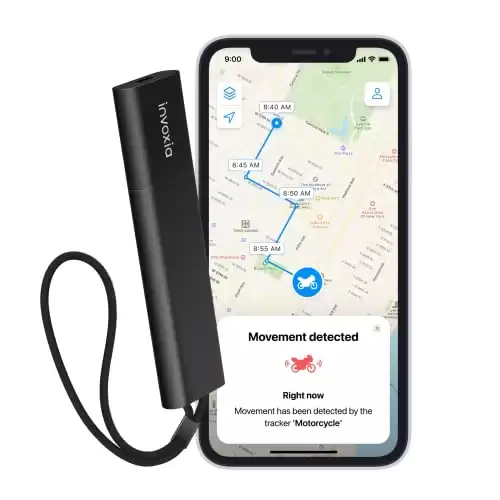
Invoxia Real Time GPS Tracker
  • 2-year subscription with no fees
  • For vehicles, cars, bikes, motorcycles
  • 120-hour battery (moving) to 4 months (stationary)
  • Anti-theft alerts
  • Black

While some smart locks have trackers that work with GPS or Bluetooth, they aren’t ideal for deterring thefts, nor are they perfect when trying to recover a stolen bike. We don’t think it’s reliable because most thieves will simply toss a lock to the side once they get their hands on your bike. And, because the tracker tracks your lock, not your bike, you may never get your bike back. However, several types of bike trackers work with Bluetooth, GPS, or an app that is attached to your bike and can help aid in tracking it down.


The genius thing about some trackers is that they look like they’re just another part of your bike, so you can effectively hide them in plain sight. For example, you can find bike trackers that look like lights or other bike accessories or that attach to under your bike seat. Of course, these aren’t always perfect.

U-Locks
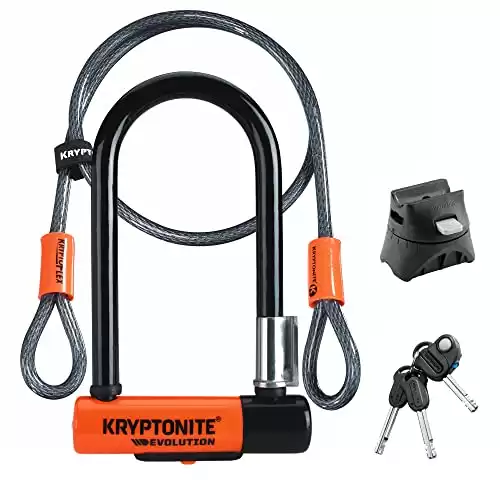
Kryptonite Evolution Mini-7 Bike U-Lock with Cable
  • Made from hardened max-performance steel
  • 4-foot cable to secure the front wheel
  • Features a disc-detainer locking mechanism
  • Very robust and easy to use

A good U-lock will fit snuggly, not leaving a lot of room for would-be thieves to wrestle a picking device or a hacksaw through it.
 
Bike Sharing

While not everyone lives in an area where bike sharing exists, they are a decent alternative to a smart bike lock. When you’re part of a bike share, you don’t own your bike, you rent one. You won’t have to worry about carrying a lock, smart or otherwise.

Lyft has branched out from ride-sharing to include bike sharing. The program is available in many major U.S. cities, including San Francisco and the greater Bay Area, Portland, Washington DC, New York City, Chicago, and Columbus.

With Lyft’s bike-sharing program, you can rent bikes with safety features like attached lights and built-in brakes to tour cities or just make it through your morning commute.
 
Register Your Bike

While all locks can help prevent theft, the sad fact is that nothing is 100% effective all the time. And, if your bike does get stolen, it can be very hard to recover. One way to help make sure you can get your property back is to register your bike with Bike Index.

Bike Index is not an alternative to a smart bike lock but rather a supplement to any bike theft prevention. Bike Index is a free registration program that uses community outreach and law enforcement partners to help you reunite with your trusty steed.


Wrapping Up

While any lock is better than no lock, we feel that smart bike locks need just a little more time on the market to work out the kinks. In the meantime, using a secure U-Lock and common sense, like locking your bike in a safe, well-lit area, will help prevent theft.
Read More

The difference between RS232 and VGA

29 September 0
RS232 vs VGA: What’s the Difference?


Key Points
  • RS232 and VGA are not interchangeable and are different in every way.
  • RS232 was developed in the 1960s to connect peripherals to computers, while VGA was introduced in 1987 to replace EGA with better resolution and color depths.
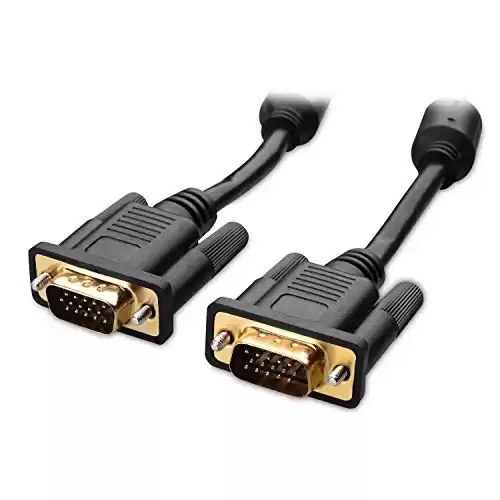
  • RS232 connectors have 9 pins for horizontal data transfer, while VGA connectors have 15 pins for both horizontal and vertical communication.
  • RS232 is a serial interface that transfers information one bit at a time, while VGA transmits voltage levels for displaying graphics.
  • RS232 became obsolete in the early 2000s, while VGA saw longer use until the early 2010s and was replaced by DVI, HDMI, and DisplayPort.
Have you picked up a D-shaped connector and wondered if it’s universal? You might think that RS232 and VGA are interchangeable, but they aren’t. Apart from their design, they’re different in every way.


So what do they do and which one should you use? In this article, we talk about how each came about, what their functions are, and which you’re more likely to use with modern technology. Let’s get into it.

RS232 vs VGA: Side-by-Side Comparison


RS232 vs VGA: What’s the Difference?

History

RS232 (Recommended Standard 232) was developed in the early 1960s as a method of connecting peripherals to computers. Technicians at the Electronic Industries Association needed a way to transfer information that devices such as modems, printers, and mice were trying to convey.

The original RS232 design featured 25 pins but was too large for consumer use. The connector found only specific applications until the late 1980s, when it was redesigned as a slimmer DB-9.

The popular VGA (Video Graphics Array) connector wasn’t seen until decades later. Introduced by IBM in 1987, it aimed to replace the EGA with better resolution and color depths. Featuring displays as high as 800×600 pixels, it quickly became the dominant connector for video display.


The original DE-15 design worked well for several years, but as the resolution changed and evolved from 640×480, IBM needed to tweak the port. The new HD-15 featured the same amount of pins but with smaller spacing for greater compactness. It became the prominent model, and the one most commonly used in discussions on the topic.

Port Connectors

The port design is where people typically confuse RS232 and VGA. At first glance, it’s easy to mistake one for the other; after all, they both share the same D-shaped design. This is typically called a D-sub connection and has been used in several historic port models. However, this is about as close as the two get to being similar.

With a closer look, you’ll notice that RS232 connectors feature 9 pins. These help with data transfer on a horizontal level. It uses these pins to control signals such as Request to Send (RTS) and Clear to Send (CTS).


The VGA connector, on the other hand, has 15 pins in its design. These allow it to talk to the computer on both a horizontal and vertical level. Additionally, VGA uses its pins to carry a wide range of voltage levels for red, green, and blue channels.


Functions

While the two look similar in design, they have different applications.

RS232 is a serial interface, meaning it uses a single communication line to transfer information one bit at a time. It sends commands using start and stop bits, framing each data byte. This allows the computer and peripheral to talk without needing to sync signal timing.

VGA works with multiple communication lines to display graphics. It transmits voltage levels that correspond to the colors and brightness of the image it’s trying to display. For this, it communicates both horizontally and vertically. However, because it sends no demands, VGA has no start-stop feature.

Obsolescence

The RS232 maintained popularity well into the late 1990s. However, with the rise of information technology, the connector became too bulky for practical use. Computer designs started to opt for USB ports, which promised faster communication in a smaller model. Since the early 2000s, RS232 was considered obsolete and was rarely seen in mainstream devices.


VGA saw slightly longer use, well into the early 2010s. However, much like other D-sub connectors, it too lost popularity with the need for smaller and faster ports. VGA was replaced with three main interfaces: DVI (Digital Visual Interface), HDMI (High-Definition Multimedia Interface), and DisplayPort.

RS232 vs VGA: 6 Must-Know Facts
  • People often confuse RS232 and VGA for their D-shaped port design, which is commonly called a D-sub connection.
  • RS232 and VGA differ in their design in that the former has only 9 pins, while the latter has 15.
  • RS232 was developed in the early 1960s as a method for allowing peripherals to communicate with the computer.
  • VGA was developed over 20 years later as an improvement on the EGA, a communication path for displaying images and videos on a monitor.
  • RS232 became obsolete in the early 2000s. USB replaced it with its quicker transfer speeds and smaller design.
  • VGA became obsolete about 10 years later, with HDMI and Display ports replacing it for similar reasons.
RS232 vs VGA: Which One Is Better? Which One Should You Choose?

RS232 and VGA work similarly, but their functions differ significantly. One bridges communication between peripherals and the computer, and the other strictly displays images. More importantly, neither port does the same task as the other.

However, because they’re both outdated, it’s unlikely you’ll use either. For modern computers, you’re likely to use USB for peripherals and HDMI for display. But this information is worth knowing if you’re working with antique technology.

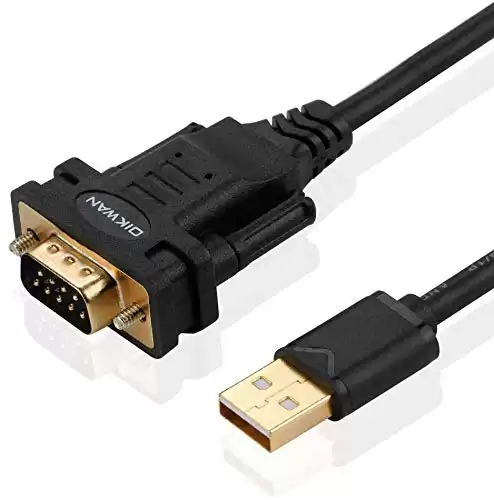
1.OIKWAN USB to RS232
  • USB 2.0 to RS232 male DB9
  • Supports data transfer speeds up to 1Mbps
  • FTDI USB serial with the latest FTDI chipset
  • Geared for devices such as GPS, routers, serial modems, barcode scanners, label writers, digital cameras, and card readers


2.Cable Matters VGA to VGA Cable 10ft With Ferrites
  • Contains 10 foot VGA to VGA cable
  • Comes with a screw-in VGA cable
  • Support high-resolution LCD and LED monitors
  • Clear, quality transmission

Read More

Tuesday

Best goalkeepers in world football in 21st Century

12 September 0
25. Yehvann Diouf
Yehvann Diouf has impressed / JEAN-CHRISTOPHE VERHAEGEN/GettyImages

We kick off the list with a player who broke onto the scene in 2022/23, becoming one of the highest rated young goalkeepers around thanks to his brilliant form with Reims.

Yehvann Diouf is dependable and has a flair for spectacular saves too.

24. Gregor Kobel
Kobel has impressed for Dortmund / Stuart Franklin/GettyImages

Despite the embarrassment of riches Borussia Dortmund have boasted in attack over the years, they've never really had a top shot stopper.

But Kobel could be the man to finally end BVB's fears. Still in his mid 20s, the Switzerland international has been impressive since arriving from Stuttgart.

23. Frederik Ronnow
Ronnow is shining in the Bundesliga / Marvin Ibo Guengoer - GES Sportfoto/GettyImages

It took a while for Frederik Ronnow to establish himself outside of Denmark, but he was eventually trusted by Union Berlin.

Union conceded only 38 goals in the 2022/23 Bundesliga, the joint best effort alongside Bayern Munich. Ronnow will hope to usurp Kasper Schmeichel as the Danes' main goalie soon, too.

22. Giorgi Mamardashvili
Valencia's number one / Juan Manuel Serrano Arce/GettyImages

Giorgi Mamardashvili is a name which popped up quite a bit over the summer, with the goalkeeper being linked with basically every club in Europe at some point.

The 22-year-old will eventually earn a move to a top club, but for now he's gaining plenty of good experience with Valencia.

21. Guglielmo Vicario
Vicario is Tottenham's new number one / Visionhaus/GettyImages

Italian goalie Guglielmo Vicario has done things the hard way throughout his playing career but a fine season with Empoli earned him a move to Tottenham.

He's been in great form since arriving in the Premier League.

20. Koen Casteels
Casteels is quite literally massive / Stuart Franklin/GettyImages

If not for Thibaut Courtois, Wolfsburg's Koen Casteels would definitely have more than his measly five caps for Belgium so far in his career.

Unfortunately, he'll have to deal with being their second-choice for a little while longer. But at least he's done enough to get a ranking on this list, eh?

19. Yann Sommer
Sommer is one of the Bundesliga's top goalkeepers / Stuart Franklin/GettyImages

Yann Sommer's move to Bayern Munich from Borussia Monchengladbach when Manuel Neuer got injured stunk of a lot of what's wrong with the Bundesliga in the modern age.

Bayern's monopoly on the division helped them pick up a consistent performer in Sommer, who was brilliant for Switzerland at Euro 2020, as Neuer's temporary replacement.

18. David Raya
Raya was a squad member as Spain won the 2022/23 Nations League / ANP/GettyImages

David Raya has turned into one of the Premier League's top shot stoppers and his role as a playmaker at the back has made Brentford a slick operation under Thomas Frank.

Now he's finally got his big move to a top club in Arsenal, expect Raya to become a regular at the Emirates sooner rather than later.

17. Jordan Pickford
What a hilarious chap / Visionhaus/GettyImages

Despite spending much of his Premier League career as a meme, Pickford has undergone quite the redemption arc in the last two years or so.

He's quietly improved his reliability and remains as useful as ever in possession, while he was one of the top players at Euro 2020 and would have become a national hero had that final shootout ended in an England win.

16. Unai Simon
Athletic knew they had a ready made replacement for Kepa / BSR Agency/Getty Images

A regular in the Spanish national team, Unai Simon is deserving of his place in the top 25 even if that error at the Euros continues to follow him around.

Two penalty saves in the Nations League final victory over Croatia endeared Simon to the Roja faithful.

15. Bernd Leno
Leno has improved at Fulham / Matt McNulty/GettyImages

Whether the pressure of playing for Arsenal got to Bernd Leno or he simply endured a rough patch of form at Emirates is anybody's guess.

At Fulham, however, the German goalie has improved markedly and is now one of the English top flight's more reliable custodians.

14. Aaron Ramsdale
A quality goalkeeper / Visionhaus/GettyImages

You've heard all the jokes about Aaron Ramsdale's bazillion relegations from the Premier League.

But strikers and forwards alike aren't laughing anymore thanks to his collection of highlight reel saves. He loves the chat, too.

13. Nick Pope
Pope is a fearsome goalie for Newcastle / James Gill - Danehouse/GettyImages

There are few around with the sheer box presence and command of their defence like Nick Pope.

The England international isn't too hot with the ball at his feet but that matters little to Eddie Howe and the Magpies, whose qualification for the Champions League was aided tremendously by Pope's consistent performances between the sticks.

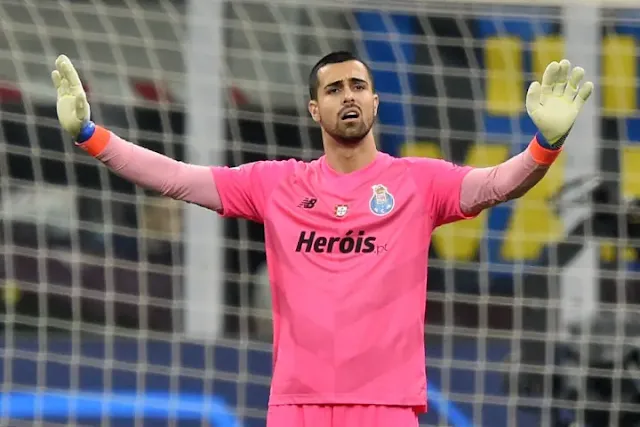
12. Diogo Costa
A quality GK / Giuseppe Bellini/GettyImages

Still just 23 years old, Diogo Costa has been one of the most talked about goalkeepers in Europe for quite a while - and for good reason too.

Costa's the archetypal modern day goalkeeper, and will surely be the number one for one of the biggest clubs in Europe very, very soon.

11. Gianluigi Donnarumma
Donnarumma is fulfilling his potential / Quality Sport Images/GettyImages

Now this lad has a bright future.

After leaving boyhood club Milan for Paris Saint-Germain, Gigio's future looked to be carved out. He finally usurped Keylor Navas as PSG's undisputed starter and was a key part of the Azzurri team which won Euro 2020, also being named player of the tournament too.

Some poor years since including disastrous mishaps in the Champions League see him drop out of the top ten.

10. Yassine Bounou
Here comes Bono / Soccrates Images/GettyImages

Morocco international Yassine Bounou - commonly known as Bono - has emerged as one of the finest stoppers in La Liga since his move to Sevilla.

He performed heroics as his side won the Europa League in 2020 and also enjoyed a wonderful 2022 World Cup as Morocco reached the semi finals.

9. Jan Oblak
Oblak has looked shaky recently / Quality Sport Images/GettyImages

There are times watching five-time Zamora Trophy winner Jan Oblak when you might genuinely believe he has the power to attract the ball towards his hands. It's like his gloves have their own gravitational pull.

However, he hasn't looked his formidable self over the last 12 months while his competitors have thrived, so his ranking has dropped as a result.

8. Andre Onana
Man Utd's new number one / Visionhaus/GettyImages

A year out of the game for a drugs ban was tough for Andre Onana but he's quickly established himself ahead of Samir Handanovic at Inter.

The former Ajax stopper brings the ball out of his box regularly, aiding his side's build-up play with terrific distribution while making important saves between the sticks.

There's a very good reason why Man Utd spent a boatload to sign him.

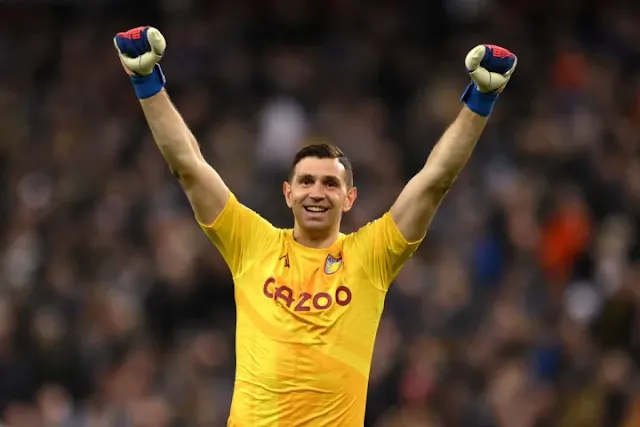
7. Emiliano Martinez
Martinez's rise has been incredible / Clive Mason/GettyImages

What a rise it's been for Emi Martinez.

The Argentinian moved to Aston Villa after a few months in the spotlight at Arsenal and has since proven he's really, really bloody good.

So good, in fact, that he's become Argentina's number one, played a big part in winning them the World Cup and Copa America and earned Lionel Messi's respect with his s***house antics.

6. Manuel Neuer
Neuer is back to his best after struggling with injuries late in the 2010s / Sebastian Widmann/GettyImages

Manuel Neuer played a big role in the reinvention of the modern goalkeeper and he remains one of the very best sweeper-keepers in the business today.

He's only got a few years left and a skiing injury saw him ruled out of the end of the 2022/23 season, but he should be back to his best soon enough.

5. Ederson
Ederson has incredible distribution / Quality Sport Images/GettyImages

When Pep Guardiola made a cheeky remark about Ederson being the best penalty taker at Manchester City everyone believed him - such is the technical ability of the Brazilian stopper.

2022/23 saw the Brazilian rise to the occasion in the Champions League, making heroic stops against Real Madrid and Inter as City won the tournament for the first time ever.

4. Mike Maignan
Hugo Lloris' long term replacement in net for France? / Jonathan Moscrop/GettyImages

Milan had a huge goalkeeper-shaped hole to fill when Gianluigi Donnarumma departed, but since Mike Maignan rocked up to San Siro the Rossoneri have looked as solid as ever.

The French stopper is now firmly the best goalkeeper in Serie A.

3. Marc-Andre ter Stegen
It's been a rough few years for Barcelona but their goalkeeper is still brilliant / Eric Alonso/GettyImages

Razor sharp reflexes, wrists like steel, distribution like Andrea Pirlo and a really cool name. These are just a few of the things that make Marc-Andre ter Stegen one of the best goalkeepers in the world.

Barcelona's rebuild continues but they don't need reinforcements between the sticks, with Ter Stegen taking home the 2022/23 Zamora Trophy.

2. Thibaut Courtois
Courtois is the best goalie in the world / Alex Livesey - Danehouse/GettyImages

After a shaky opening at Real Madrid, Thibaut Courtois has been in exemplary form to convince any remaining doubters of his ability.

Courtois' long limbs and excellent shot stopping ability have saved Los Blancos on a fair few occasions in recent seasons - including the 2021 Champions League final - and he also scooped the Zamora trophy in 2020.

He's so good that he's still number two on this list despite tearing his ACL.

1. Alisson Becker
The best / Visionhaus/GettyImages

When Liverpool spent nearly £70m on Alisson back in 2018, social media was awash with jibes from rival fans questioning the size of the fee. But they're not laughing now.

The Brazilian has proved to be a game-changing upgrade on Loris Karius at Anfield, perfectly straddling the attributes of both a sweeper-keeper and traditional stopper.

He's also played his part in Liverpool becoming Premier League, European and world champions in recent seasons. Worth the money, for sure.
Read More

Friday

Role Of Business Analysts In SCRUM

08 September 0
Role Of Business Analysts In SCRUM And Why Is A QA Best For This Role?


Responsibilities of a BA

There are several Roles of Business Analysts in Scrum and there are certain responsibilities to which a BA should adhere.


A few selective ones among them are mentioned below.
  • Grooming product backlog based on the prioritization provided by the product owner.
  • Analyzing customer needs and finding solutions to address them.
  • Creating requirements in the form of user stories with appropriate acceptance criteria.
  • If in case the user stories have already been created by the product owner (with acceptance criteria), then review them to make sure that all business rules are covered and the acceptance criteria meet the user story functionality.
  • Work with product owners and stakeholders to understand the scope, suggest improvements to the requirements, etc.
  • Prepare documents like wireframes, design flow, UI, etc., as and when required.
Apart from this, a Business Analyst is an important participant in the brainstorming sessions when the team meets to discuss the upcoming sprint backlog. The BA guides the team, helps them to understand the requirements, and even at times has to approve the implementation.


He also works closely with QAs like analyzing test coverage, converting real-world use cases into test cases, providing insight to test complex functionalities, etc. BA also participates in planning meetings to help the team in estimations by helping them to understand the flow, complexity, and dependency.

BA has to always keep learning about the new trend that is going on in the market, keep innovating and stay updated about the business area for which the product has been made.


Business Analyst as a Product Owner

Depending upon the customer and the company, it happens that some companies have the Business Analyst as the product owner. BA is the contact point for all queries. BA then becomes the mediator between the team and the stakeholders.


BA has to understand the requirements of the stakeholders, their thinking about taking the business ahead, and what (and how) the business should grow. Then based on the requirements of the stakeholders, the BA must create the documents, user stories, prioritization the stories, help the team understand them, answer their queries about the same, etc.

The most important thing to note here is that this is advisable when the BA is physically available and is not geolocated to a different time zone so as to avoid the ‘gap in communication’.

If the BA as in the product owner is geolocated to a different time zone, then it is not possible to approach him every time and the only way to communicate is by email or chat or call, hence this may result in lack, gap, and even miscommunication at times.

As per my experience, this should be followed when the BA is sitting in your office, next to your team so that your work won’t hamper, and (s) he will be easily approachable. From a BA’s point of view, they own the product on behalf of the stakeholders/customers, make appropriate decisions, and even need to learn new skills which may include learning some technicalities of development.


Having a Business Analyst as a Product Owner is an added advantage because the BA is able to understand the product very well, and prioritization and scoping of tasks can be negotiated as well.


Business Analyst as a Team Member

The other option is to have the Business Analyst as a team member because the Product Owner will not be available every time. If the Business Analyst is a team member then they can help their peers with backlog grooming.

Having a Business Analyst as a team member is more advantageous because the technical team finds it easy and comfortable to communicate with the BA for clarifications or discussions. BA is also working closely with the QA team for testing i.e. analyzing the coverage, use cases covered, any hidden requirements, dependability or effects.


Sometimes the acceptance criteria written by the product owner may be vague and not clear, then as a team member, it becomes the responsibility of the BA to write elaborate and well-explained acceptance criteria. If the team needs more information, then the BA can also create wireframe documents, flow documents, etc. to help the team understand the requirements.

In large-scale projects where the modules are distributed among teams, having a BA for more than one team is also an added advantage. Since BA is the same across teams, (s)he can think about the interoperability of the modules, how new features or updates will affect the other modules, etc.

Thus, this would help a great deal to the technical teams to consider such aspects as not always do the user stories or acceptance criteria mention such.


Importance and Role of Business Analysts in the SCRUM Team

The role of Business Analysts in SCRUM is undoubtedly very important in the success of a project. Their involvement starts right from understanding the customer’s need for a Sprint Demo. They are the first point of contact for the technical team for clarifications. They are even more important in the initial phases of a new project and the projects which are large in scale.


The Product Owner will not always be a good writer, sometimes they come from a technical background and hence it becomes the responsibility of the Business Analyst to write the stories, acceptance, wireframes, etc.

In my project, our PO was not so good with documentation and even the user stories written were never more than 2-3 liners while the acceptance criteria were only a 1 liner. It was the Business Analyst who used to modify them, make them more explanatory and elaborative.

Even at times, it happened that our PO wrote user stories that had 21 or more story points, and hence the Business Analyst had to spend extra time & effort in breaking them down and prioritizing them with the Product Owner.


You can imagine what would happen if there was no Business Analyst and your Product Owner has created a user story like “As a customer, I want to perform all banking operations for my account”, with acceptance criteria like:
  • The customer should be able to log in.
  • The customer should be able to make transactions on my account.
  • The customer should be able to download my historical statements etc.
Now, in my opinion, this user story would hold even more than 34 story points, hence there is a need to break it down further. Things will worsen for the technical team if the proper flow diagrams and UI screens (to be created) are not provided.

This would lead to a failing sprint, and in turn, a failed project. Unless the Product Owner is a trained/practiced Business Analyst, there is a need to have one on the team.
 
Why is QA the best fit for this Job?

QA is a person who verifies the proposed solution for a problem/requirement by testing it. Hence the Business Analysts / Stakeholders / Product Owners are very eager to know about the feedback of QA. The involvement of a BA in testing is little more than what it is in development.


A Business Analyst works closely with QA in reviewing the test case coverage which provides insight into hidden flows and requirements/effects. Thus this kind of knowledge sharing (by the BA) makes them understand the product functionality, the business rules, the customer expectations, the flows, dependencies, and everything completely.

QA always tests from the point of view of the end customer who would be using the product, hence the chances of helping the customer for improvements, enhancements in the product are more (when compared to a developer). Developers develop the product for the given user story and the set of acceptance criteria but do not always think about how a customer would use the product.


In development, the implementation of a product, the flow, and the rules are well defined but testing is completely based on logical thinking and the ability to think from the point of view of the end-users.

QA can start getting into the role of Business Analysts in SCRUM because of the lot of opportunities that are presented in the day-to-day work.
Read More

Popular Posts

Post Top Ad